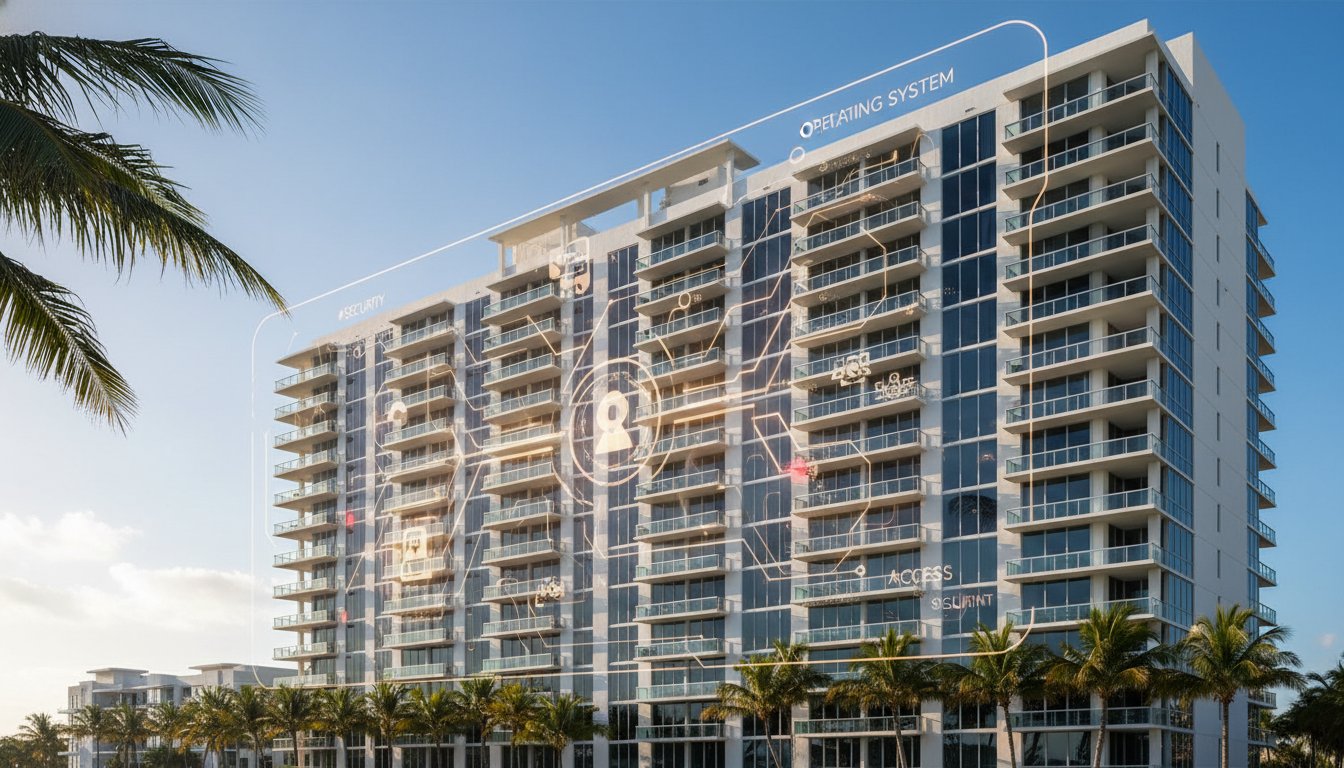
What if your building was no longer a collection of static materials and disconnected wires, but a sentient, breathing entity that anticipated its own failures? Most asset managers feel the crushing weight of fragmented systems that refuse to communicate. You're likely exhausted by the friction of siloed security and the mounting liability of reactive maintenance. A unified condo building operating system acts as the central nervous system for these high-value assets. It reconciles the digital with the physical. It brings order to the chaos of disconnected hardware.
Recent data from 2025 indicates that 65 percent of renters now find apartments with smart home technology more appealing, making the move toward integration a financial necessity. This article reveals how a digital backbone transforms disparate hardware into an intelligent, secure, and high-performing living organism. You'll learn how to replace reactive repair cycles with proactive data intelligence. We'll explore the shift toward a single pane of glass for all operations. This architecture reduces staff friction and secures the long-term value of your residential portfolio.
Key Takeaways
- Move beyond fragmented hardware by establishing a unified digital connective tissue that acts as the essential backbone of your asset.
- Discover how a condo building operating system orchestrates security, access control, and environmental sensors into a single, intelligent interface.
- Replace anecdotal management with precise data intelligence to reduce long-term capital expenditure and ensure the permanence of the property.
- Identify the hidden vulnerabilities of smart hardware and learn how to fortify your residential infrastructure against sophisticated cyberattacks.
- Understand the specialized requirements for coastal resilience and how to align your property with the latest safety regulations in Florida and Georgia.
The Evolution of the Condo Building Operating System
Architecture is no longer defined solely by steel, glass, and concrete. It's now defined by the invisible intelligence that binds these elements together. For decades, residential assets have functioned as a collection of isolated mechanical parts. A condo building operating system represents a fundamental shift in this paradigm. It's not a mere resident portal for paying dues or booking amenities. Instead, it's the digital connective tissue of the property. It's the central nervous system that allows a building to move from a static structure to a living, breathing organism.
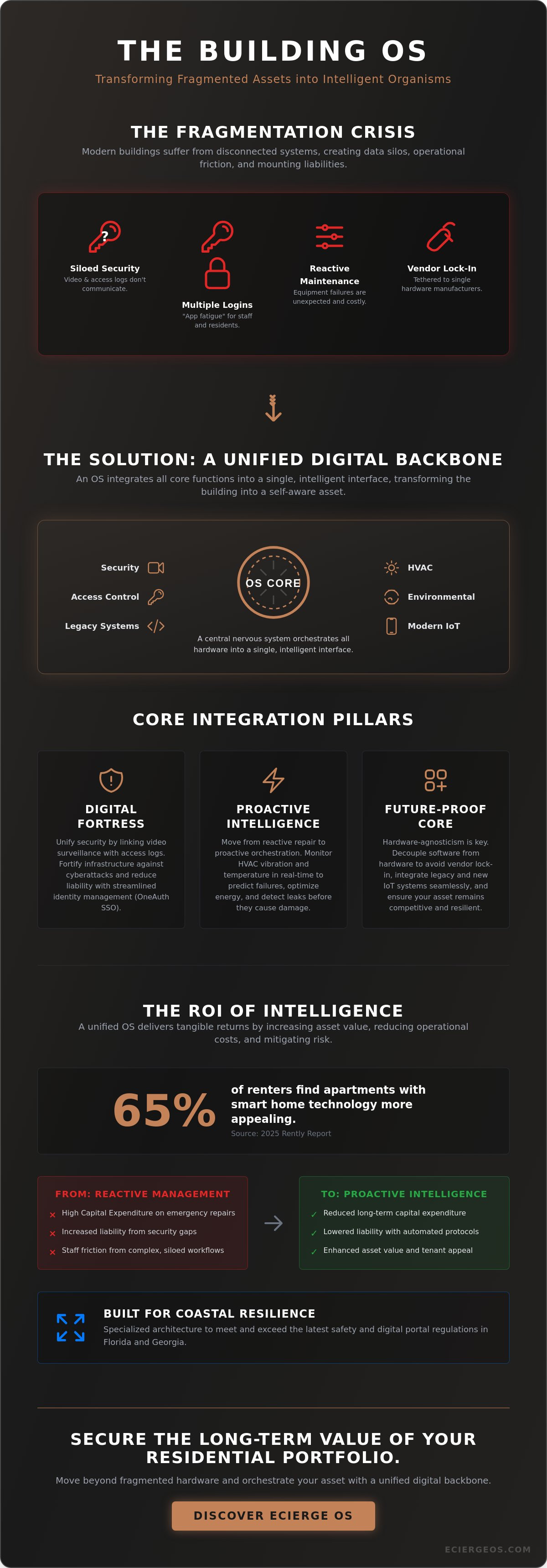
Traditional property management software often fails because it remains trapped in the administrative layer. It handles the "paperwork" of the building: billing, resident directories, and maintenance logs. An operating system operates at a deeper level. It orchestrates the physical core. While management software records that an HVAC unit is broken, an operating system monitors the unit's vibration and temperature in real time, predicting failure before it occurs. This transition from reactive administration to proactive orchestration is the hallmark of modern asset stewardship.
The Fragmentation Crisis in Modern Multifamily Assets
Property managers are currently drowning in a sea of disconnected interfaces. This is the fragmentation crisis. Managing a high-end asset often requires ten different logins for security, access control, HVAC, and Wi-Fi. This "app fatigue" isn't just an inconvenience; it's a structural risk. When systems don't talk to each other, data silos emerge. These silos prevent boards from seeing the full picture of building health. The result is a high liability from security gaps and rising maintenance costs. Disconnected infrastructure is expensive. It forces staff to spend hours on manual reconciliation rather than high-value asset management.
Hardware-Agnosticism: The Key to Future-Proofing
The most significant liability for a building in 2026 is vendor lock-in. Being tethered to a single hardware manufacturer creates a digital dead end. True intelligence requires hardware-agnosticism. A sophisticated condo building operating system must possess the power to integrate legacy systems with modern IoT sensors. This ensures that the digital backbone outlasts the current hardware cycle. As regulations evolve, such as Florida's 2026 requirement for associations with 25 or more units to maintain secure digital portals, the ability to adapt is paramount. According to a 2025 Rently report, 65 percent of renters find apartments with smart technology more appealing. By decoupling the software from the hardware, you ensure that your asset remains competitive and resilient regardless of which physical components you choose to install next year.
Architecting Unification: How an OS Integrates the Physical Core
Integration is the antidote to operational complexity. A true condo building operating system doesn't merely display data; it harmonizes the core functions of security, access control, and HVAC into a single, responsive environment. This orchestration relies on a network of IoT sensors that act as the building's sensory organs, providing real-time environmental intelligence that informs every operational decision. By centralizing these disparate streams through a condo building operating system, an asset moves from being a collection of machines to a unified, manageable entity. It's the difference between a building that simply exists and one that actively preserves its own value.
The Security and Access Control Synergy
Perimeter awareness is often compromised by the gap between video surveillance and access logs. A unified OS bridges this divide, linking visual evidence directly with entry data for a comprehensive security narrative. Through the OneAuth Single Sign-On identity service, residential staff and boards can manage permissions without the friction of multiple credentials. This streamlined identity management reduces the risk of unauthorized access from former vendors or staff. It transforms security from a series of manual checks into a verifiable, automated protocol that significantly lowers building liability and enhances resident peace of mind.
HVAC and Environmental Intelligence
Climate control must evolve beyond the simple thermostat. By integrating HVAC systems with real-time occupancy data, a building can optimize energy consumption without sacrificing resident comfort. The digital backbone also monitors the building's physical health through moisture and leak detection sensors placed in high-risk areas. These sensors protect the building envelope from the silent erosion of water damage, which is particularly vital for aging infrastructure. A sophisticated operating system transforms raw HVAC performance data into actionable maintenance schedules that extend equipment life and prevent catastrophic failures.
To achieve this level of structural intelligence, boards must first understand the current state of their digital infrastructure through comprehensive property backbone evaluations. This proactive stance allows for the prediction of system failures before they disrupt the resident experience. It shifts the management focus from emergency repairs to planned, data-driven stewardship. The result is a more resilient asset that maintains its premium status in an increasingly competitive market. Data becomes the architect of the building's future.
The ROI of Intelligence: Data Mastery for Condo Boards
Precision is the hallmark of elite stewardship. For too long, condo boards have relied on anecdotal evidence and gut feelings to manage multi-million dollar physical assets. A condo building operating system replaces this ambiguity with definitive operational intelligence. It's the difference between guessing when a boiler might fail and knowing exactly how its performance has degraded over the last six months. This shift transforms the board's role from reactive firefighting to strategic oversight.
Data mastery is the most effective tool for reducing long-term capital expenditure. When building systems work in harmony, they experience less mechanical stress and consume less energy. This isn't just about saving on a utility bill. It's about extending the lifespan of the property's most expensive mechanical components by years. A building that anticipates its own needs is a building that preserves its legacy. It's an invisible layer of luxury that residents don't see but certainly feel through uninterrupted service and pristine environments. True management is the quiet absence of crisis.
Strategic Asset Integration and Longevity
Modern infrastructure requires constant assessment to remain viable. The first step toward intelligence is often a comprehensive property backbone evaluation. This audit determines if your current wiring and connectivity can support the demands of 2026 and beyond. Integrating these systems doesn't just improve daily life; it significantly impacts property resale value. Smart building certifications are becoming a standard requirement for high-end buyers who view digital readiness as a sign of superior maintenance and long-term structural health.
Staff Empowerment Through Ecierge TrAin
Technology is only as effective as the hands that guide it. There's often a significant gap between high-tech systems and the capabilities of on-site staff. Closing this gap is essential for reducing operational risk and ensuring system longevity. Through specialized Ecierge TrAin safety training, employees move from being mere observers to proactive stewards of the asset. This training fosters a culture where staff members understand the "why" behind the data, allowing them to intervene before a minor anomaly becomes a major liability. It creates a synergy where human intuition is amplified by digital precision. When staff are empowered, the condo building operating system becomes a force multiplier for the entire property.
The Digital Fortress: Cybersecurity in Residential Infrastructure
The digital perimeter is the new masonry. In 2026, a high-rise is more than a physical structure; it's a dense network of sensitive data and interconnected controls. This complexity invites sophisticated threats. Modern condominiums have become prime targets for cyberattacks because their "smart" systems often lack unified protection. A condo building operating system must serve as a digital fortress, shielding the property backbone from external intrusion. Without this central orchestration, every smart lock and sensor becomes a potential entry point for malicious actors.
Vulnerability often hides in the hardware itself. Most "smart" devices aren't built with architectural-grade security in mind. They're designed for convenience, not permanence. This creates a fragmented perimeter where a single compromised thermostat can grant access to the entire building network. Protecting the backbone requires a shift in perspective. You must treat digital security with the same gravity as structural integrity. Securing the future of an asset means ensuring that its digital pulse cannot be hijacked by outside forces.
Mitigating Cyber Liability for HOA Boards
Boards face significant legal implications if a building-wide data breach occurs. Fiduciary responsibility now extends to the digital realm. A breach isn't just a technical failure; it's a liability event that can lead to costly litigation and damaged reputations. Implementing a Single Sign-On (SSO) service is a critical step in preventing unauthorized access. It ensures that only verified individuals can interact with the building's core functions. To identify these risks before they are exploited, boards should secure a cyber security property assessment to map the weak links in their digital foundation. A technical infrastructure audit provides the clarity needed to fortify the property for the long term.
OneAuth: The Standard for Residential Identity
Password fatigue is a security risk. When staff and residents juggle dozens of credentials, they resort to insecure practices. OneAuth eliminates this friction while simultaneously increasing security protocols through centralized identity management. It allows for the precise management of vendor access, ensuring that contractors only have entry to the systems they need for a specified time. This auditability is essential for maintaining a secure environment. OneAuth defines residential digital sovereignty by ensuring that a resident's identity remains a secure, private asset that is never compromised by the building's operational needs. By centralizing identity through a condo building operating system, you create a seamless and impenetrable environment for all stakeholders.
Implementing the Ecierge Standard in South Florida and Georgia
Geography dictates architecture. In South Florida, the digital backbone must be as resilient as the physical foundation. The relentless exposure to salt and humidity doesn't just corrode steel; it challenges the longevity of every mechanical and electronic system. Implementing a condo building operating system in this environment requires a deep understanding of infrastructure resilience. It's about ensuring that the digital pulse remains steady even in the most demanding coastal conditions. Resilience is a requirement, not an option.
Georgia presents a different set of complexities. Effective January 1, 2026, the state has adopted new building codes based on the 2024 International Building Code and the 2023 National Electrical Code. Navigating these shifting regulations requires integrated safety and data protocols that go beyond traditional management. Local expertise in Miami and Atlanta is critical. A generic solution cannot account for the specific legal and environmental pressures of these regions. You need a partner who understands the local soil and the local statutes.
The Infrastructure Audit: Your First Step
Legacy buildings in South Florida often possess a "fragmented backbone." Decades of piecemeal upgrades have left many assets with a patchwork of incompatible systems. The first step toward unification is a property backbone evaluation. This audit identifies immediate vulnerabilities in the current architecture. We design a phased integration plan that respects the daily life of the building. This methodical approach ensures that the transition to an intelligent environment happens without disrupting the resident experience. It's particularly vital given that Florida associations with 25 or more units must provide a secure digital portal by January 1, 2026.
Joining the Visionary Orchestrators
We partner with boards to deliver a 'Single Pane of Glass' experience. This isn't a mere upgrade. It's a fundamental transition from a collection of fragmented tools to a unified operating environment. By centralizing all functions through a condo building operating system, boards gain the clarity needed for true stewardship. You're no longer just managing an asset; you're orchestrating its future. Data becomes the instrument of your vision.
The Dawn of the Orchestrated Property
The era of the disconnected building is ending. It's time to move beyond the friction of siloed systems and the vulnerability of unmanaged hardware. By establishing a condo building operating system, you secure the permanence of your asset through hardware-agnostic integration and real-time operational intelligence. You transform a collection of disparate parts into a high-performing organism. This shift ensures that your infrastructure doesn't just survive the next decade but thrives within it.
True stewardship requires a digital perimeter as robust as your physical one. Specialized cybersecurity assessments for residential assets identify the silent threats that legacy management overlooks. Through OneAuth SSO, you grant your staff and residents secure, streamlined identity management that eliminates password fatigue. This is the new standard for luxury living. It's a commitment to order, security, and the enduring value of your portfolio.
The future of your asset is no longer a matter of chance. It's a matter of orchestration. Architect your building's digital future with Ecierge OS.
Frequently Asked Questions
What is the difference between property management software and a condo operating system?
Property management software focuses on administrative tasks like billing and resident directories, while a condo building operating system orchestrates the physical core of the property. It acts as the digital connective tissue that allows security, access, and mechanical systems to communicate. It's the difference between recording a maintenance request and the building autonomously predicting a system failure.
Can Ecierge OS integrate with our existing, older HVAC and security hardware?
Ecierge OS is designed to integrate with your existing infrastructure through hardware-agnostic protocols. You don't need to replace your current HVAC or security units to achieve unified intelligence. Our platform bridges the gap between legacy machinery and modern digital orchestration. This allows for a seamless transition to an integrated environment without the capital expense of total hardware replacement.
How does a hardware-agnostic platform protect our building's long-term investment?
A hardware-agnostic platform protects your investment by preventing vendor lock-in and ensuring digital longevity. It allows your software backbone to outlast individual hardware lifecycles. As physical components degrade or evolve, the condo building operating system remains constant. This architectural flexibility ensures your asset stays technologically relevant as regulations and resident expectations shift toward 2026 and beyond.
Why is a cybersecurity assessment necessary for a residential building?
A cybersecurity assessment is essential because modern residential buildings are increasingly targeted for their interconnected data and controls. Vulnerabilities in smart sensors can grant malicious actors access to the entire property backbone. This assessment identifies weak links in your digital perimeter before they're exploited. It's a critical step in fulfilling the board's fiduciary duty to protect resident privacy and structural safety.
How does Ecierge OS help reduce liability for condo and HOA boards?
Ecierge OS reduces board liability by automating safety protocols and providing verifiable audit trails for all building operations. It replaces manual logs with precise, digital records of access and system performance. Through the OneAuth identity service, you ensure only authorized personnel interact with critical infrastructure. This transparency lowers the risk of operational negligence and protects the association from legal exposure.
What are the specific benefits of Ecierge TrAin for our on-site staff?
Ecierge TrAin empowers your on-site staff to move from reactive observation to proactive stewardship of the asset. It closes the technical gap between complex digital systems and daily operational tasks. Staff members learn to interpret data alerts and intervene before minor mechanical anomalies escalate into major failures. This specialized training fosters a culture of professional excellence and reduces the risk of human error.
How long does it take to implement a building operating system in an existing condo?
The timeline for implementation depends on the complexity of your current infrastructure, but it typically begins with a comprehensive property backbone evaluation. This initial audit phase clarifies the integration path for your specific legacy systems. Once the architectural plan is established, the phased rollout is designed to minimize disruption to residents. This methodical approach ensures a stable and secure digital transition for the entire property.
Is Ecierge OS available for properties in both South Florida and Georgia?
Our services are specifically tailored for the unique regulatory and environmental demands of South Florida and Georgia. We address the coastal resilience needs of Miami high-rises and the specific HOA legal requirements in the Atlanta market. Our team provides localized expertise to ensure your property meets regional standards, such as Florida's 2026 digital portal mandates. We act as a dedicated partner in these key markets.