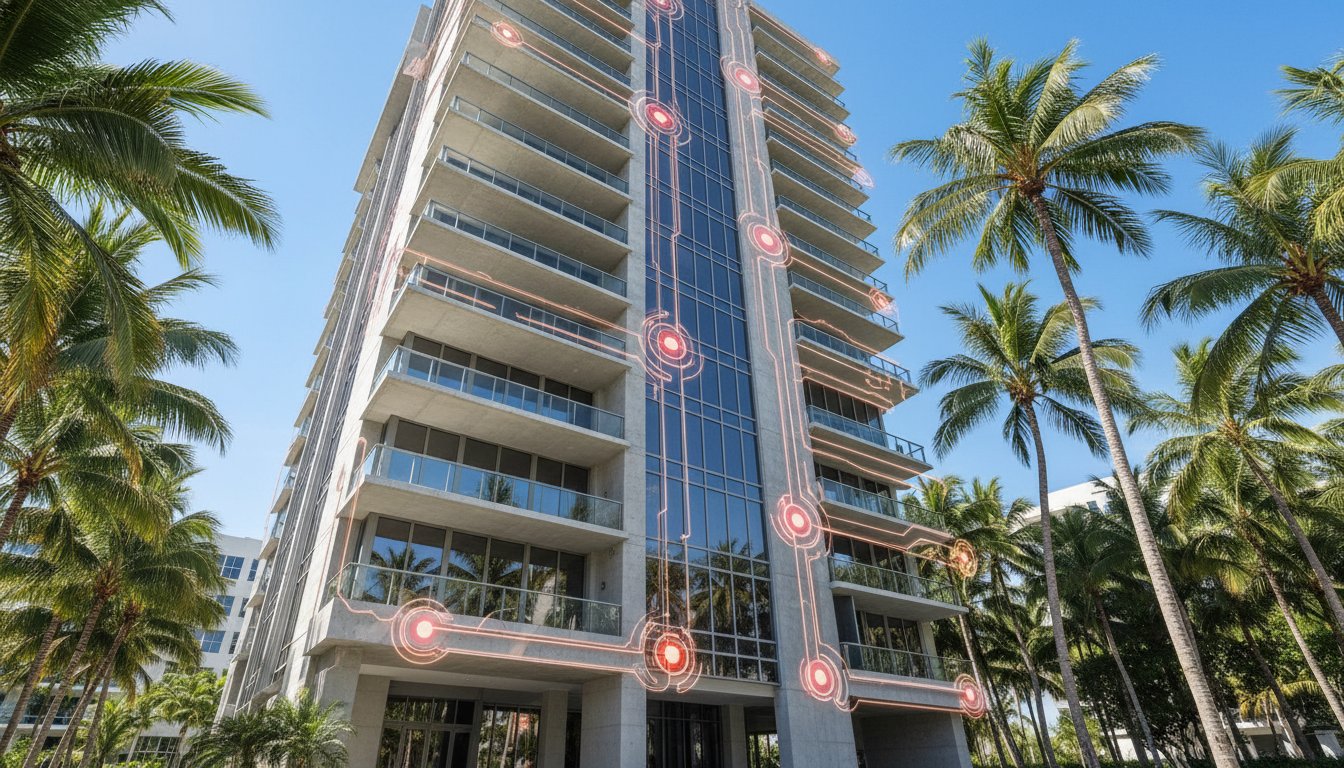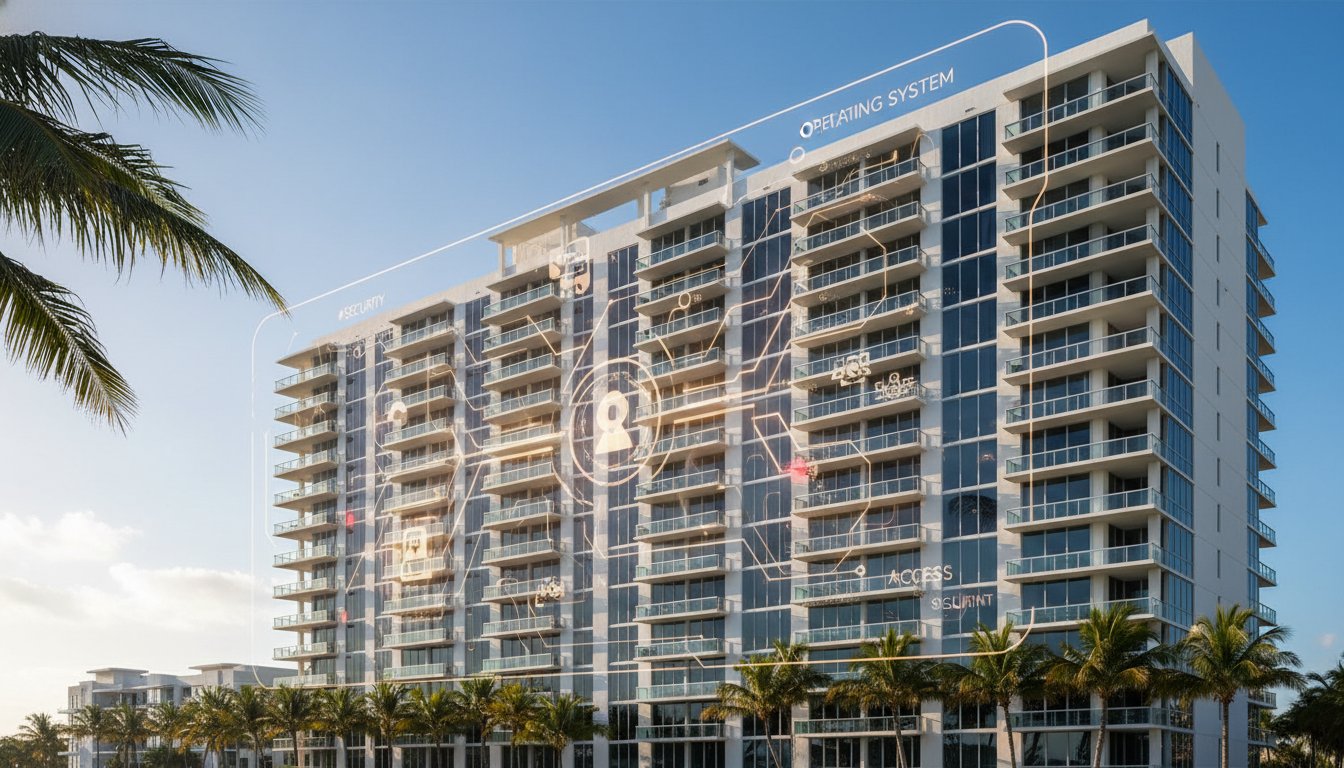
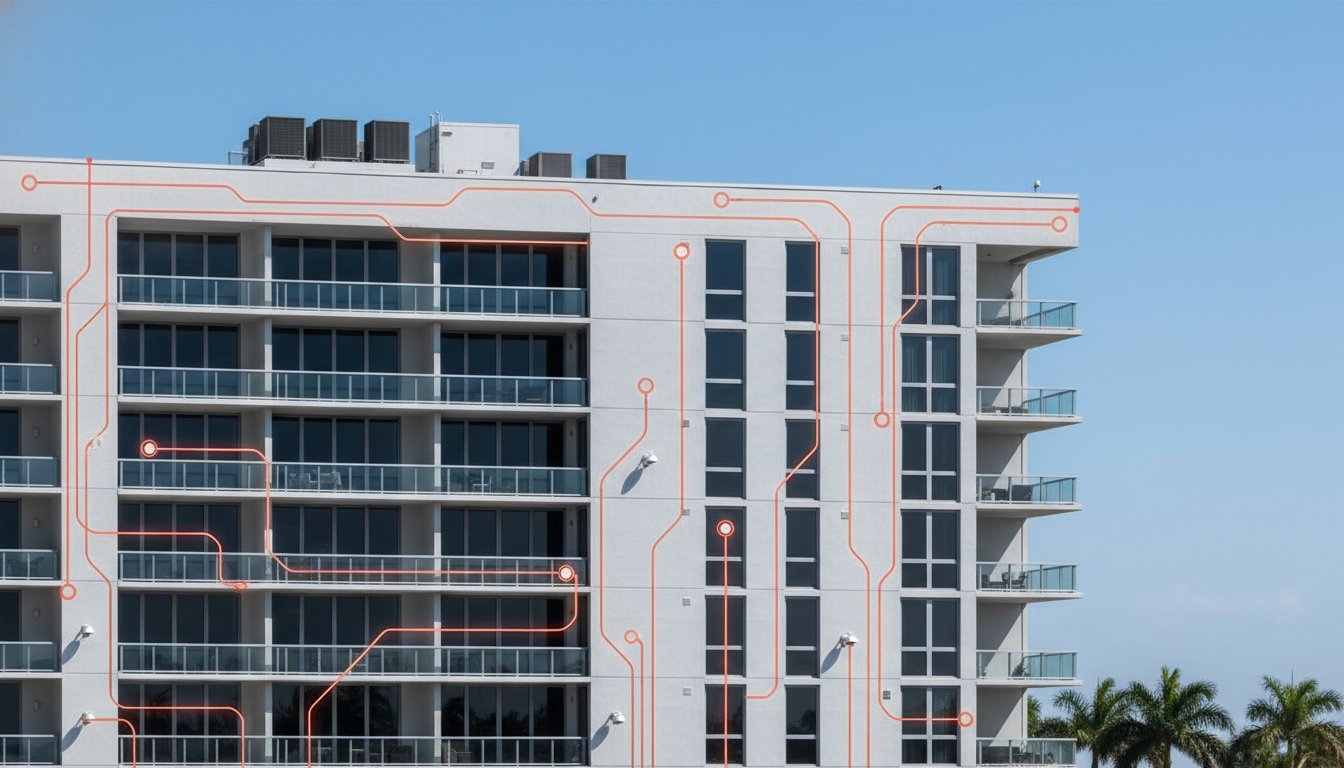
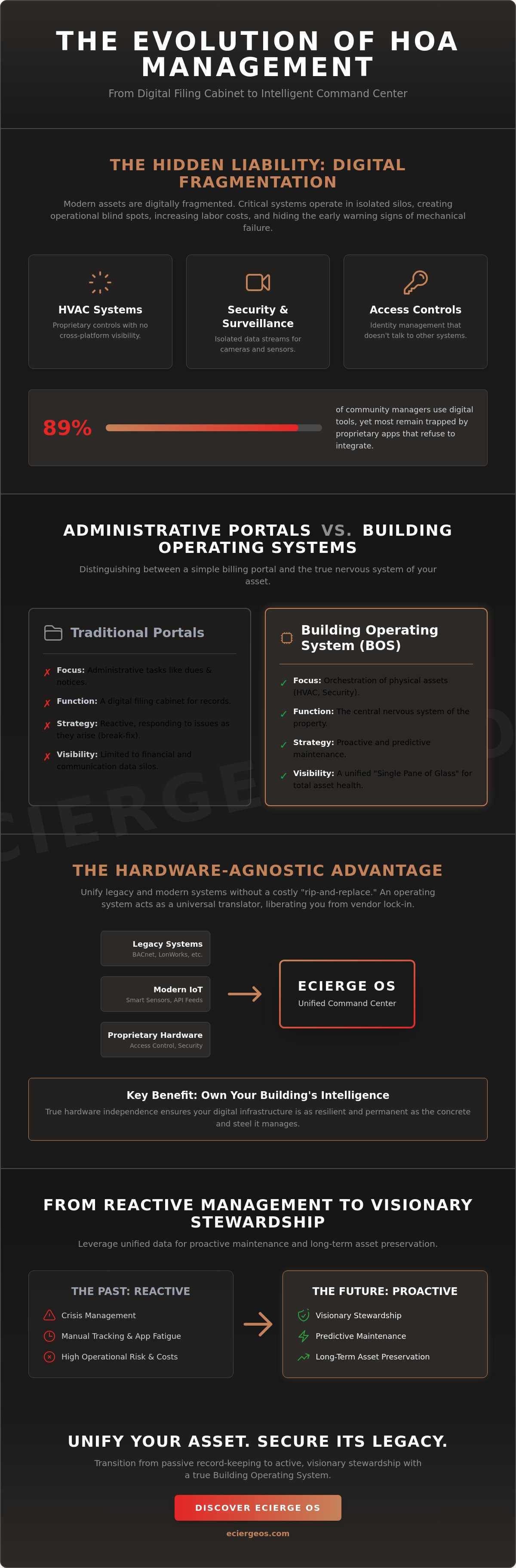
The most sophisticated physical assets today are often the most digitally fragmented. You're responsible for a complex organism of HVAC, security, and access controls, yet these systems rarely speak the same language. This silence creates more than just an inconvenience: it builds a hidden layer of operational liability. While 89% of community managers now utilize digital tools, most remain trapped between proprietary apps that refuse to integrate. True HOA building automation software isn't merely a portal for resident dues; it's the central nervous system of the property itself.
You understand the friction of manual maintenance tracking and the risk of unmonitored infrastructure. It's time to demand a unified single pane of glass that treats your digital backbone with the same gravity as your physical foundation. This article explores how a hardware-agnostic operating system unifies siloed assets into one intelligent command center. You'll discover how to transition from reactive crisis management to proactive stewardship, reducing liability while securing your asset's legacy. We'll examine the shift toward sovereign residential networks and the essential role of unified digital orchestration.
Key Takeaways
- Distinguish between administrative billing portals and true HOA building automation software designed to orchestrate the physical nervous system of your asset.
- Explore the hardware-agnostic advantage that allows legacy infrastructure to integrate seamlessly with modern digital controls without requiring a total equipment replacement.
- Recognize why a Property Backbone Evaluation is the essential first step in building a reliable digital foundation for any multi-family environment.
- Identify the core principles of a Sovereign Residential Network to mitigate the growing cybersecurity risks inherent in connected building systems.
- Shift your operational strategy from reactive maintenance to visionary stewardship by leveraging unified data for long-term asset preservation.
Beyond Portals: The Shift from Administrative to Operational HOA Automation
The traditional HOA management model is failing the physical asset. Most boards rely on management software designed for ledger entries and resident notices. This is administrative automation. It's a digital filing cabinet. In contrast, Building automation systems (BAS) represent the actual mechanical intelligence of the property. True HOA building automation software functions as a Building Operating System (BOS). It orchestrates the physical nervous system rather than just tracking the bank account. This shift represents an evolution from passive record-keeping to active, visionary stewardship.
The problem of siloed intelligence is a silent drain on property value. When security, HVAC, and access controls live in separate proprietary apps, the board loses the ability to see the property as a whole. This fragmentation creates operational blind spots that no administrative portal can bridge. A visionary orchestrator views the building as a single, living organism. Every component must communicate to ensure the longevity of the structure. By moving beyond simple data recording, HOA building automation software allows for the execution of proactive maintenance that preserves the asset for decades.
The Fragmentation of the Modern Residential Asset
In the high-stakes environments of Georgia and Florida, disconnected systems drive up labor costs and operational risk. Building staff often suffer from app fatigue. They jump between proprietary interfaces to perform basic oversight. This friction does more than slow down operations; it hides the early warning signs of mechanical failure. An administrative portal might tell you a resident paid their dues, but it won't alert you that a cooling tower is vibrating at a frequency suggesting imminent failure. The physical longevity of the asset remains at risk while the board is distracted by digital paperwork.
Defining the Building Operating System (BOS)
A Building Operating System is the unifying software layer that translates complex hardware protocols into a single, intelligent human interface. It acts as the "single pane of glass" for total property visibility. By integrating disparate data streams, a BOS enables predictive property maintenance rather than the traditional, costly break-fix cycle. This intelligence allows the system to identify inefficiencies before they become liabilities. It's a transition from recording history to executing the future. This level of orchestration ensures that the digital infrastructure carries the same weight and permanence as the physical foundation.
The Hardware-Agnostic Advantage: Orchestrating Legacy and Modern Systems
The architecture of the future is built upon the infrastructure of the past. Many boards fear that modernizing requires tearing out every legacy sensor and wire. This is the myth of the "Total Rip-and-Replace." In reality, sophisticated HOA building automation software acts as a universal translator. It bridges the gap between the heritage systems of the past and the intelligent technologies of the future. By adopting a hardware-agnostic architecture, you create a strategic layer of intelligence that sits above your physical assets. This approach allows you to integrate diverse protocols such as BACnet, LonWorks, and proprietary IoT streams into a single, cohesive environment.
The true ROI of unification lies in the liberation from vendor lock-in. When the software layer is independent of the hardware, the board regains control over the asset's digital destiny. You are no longer beholden to a single manufacturer's ecosystem or their forced obsolescence cycles. Owning the software layer means owning the building's intelligence. This independence is a prerequisite for the long-term cybersecurity of building systems. It ensures that your digital infrastructure is as resilient and permanent as the concrete and steel it manages.
Integrating Security and Access Control
Access control shouldn't be a silo. It's a vital data stream. When your identity management system integrates with the broader building OS, you gain unprecedented operational clarity. Real-time data from entry points doesn't just manage security; it informs energy distribution. If a wing is unoccupied, the system knows. This synergy between physical hardware and digital oversight transforms a simple gatekeeper into an active participant in building efficiency. Moving toward a unified identity model allows for a seamless transition from disparate keycards to a centralized, secure command center.
HVAC and IoT: The Efficiency of Unified Systems
Climate control is the building's lung. In coastal Georgia and Florida, humidity is a constant adversary. Managing this across a massive residential footprint requires more than a basic thermostat; it requires an integrated interface. IoT sensors provide the "pulse" of these mechanical systems. They predict failure long before a resident notices a rise in temperature. This proactive stance is why many forward-thinking boards are choosing to implement a unified platform to manage their mechanical legacy. This level of orchestration ensures that the building breathes efficiently, preserving both resident comfort and the physical integrity of the structure.
Evaluating the Property Backbone: Why Infrastructure Precedes Intelligence
Intelligence requires a physical medium. A building's software is only as capable as the copper and fiber that carry its commands. Many boards rush to procure HOA building automation software without first auditing the physical pathways that define their property's potential. This is a fundamental architectural oversight. A digital foundation isn't an abstract concept; it's the tangible reality of low-voltage wiring, fiber optics, and network switchgear. Without a robust backbone, even the most advanced operating system becomes a mind trapped in a paralyzed body. You can't expect sophisticated orchestration from a system strangled by antiquated cabling.
True asset stewardship begins with an honest assessment of what lies behind the walls. We've seen properties attempt to layer high-end automation over consumer-grade Wi-Fi, only to face systemic failures during peak usage. A visionary approach demands that the infrastructure precedes the intelligence. This audit isn't merely a technical check; it's a strategic repositioning of the asset. It ensures that every command sent by the HOA building automation software reaches its destination with zero latency. This is the difference between a building that merely functions and one that truly performs.
The Technical Property Evaluation Process
The evaluation of a multi-family asset's nervous system is a rigorous, technical undertaking. It begins with a comprehensive audit of existing cabling, routers, and switchgear to identify latent bottlenecks that impede data flow. In Georgia, where many high-value properties are retrofits of older structures, these audits are essential for long-term capital planning. Adhering to standards set by the International Society of Automation (ISA) ensures that the building's infrastructure meets global benchmarks for reliability. A Property Backbone Evaluation provides the empirical data required to move from guesswork to architectural certainty. It identifies exactly where the building's digital pulse is weak or intermittent.
Retrofitting for the Future
Future-proofing doesn't always demand invasive construction. Modern engineering allows boards to expand digital capacity through strategic upgrades to existing conduits and high-density wireless arrays. This ensures the backbone can support the inevitable surge of AI-driven analytics and complex IoT expansions that define modern living. The quality of this infrastructure is directly linked to property valuation. A smart-ready building is a more resilient, prestigious asset. By investing in the foundation today, boards secure the legacy of their property. It's about building for the next generation of residents who expect their environment to be as intelligent as it is permanent.
Cybersecurity as a Foundation: Protecting the Sovereign Residential Network
The modern residential asset is a complex web of digital entry points. Every connected elevator, surveillance camera, and HVAC controller represents a potential vulnerability in the building's armor. While traditional management focuses on physical gates, the visionary board recognizes that the true perimeter is now digital. Residential IoT has become a prime target for exploitation. A secure property requires a Sovereign Residential Network: a fortified ecosystem where resident data and operational telemetry remain private, encrypted, and under the asset's direct control. Integrating robust HOA building automation software ensures that security is not an afterthought but the foundation upon which all orchestration is built. It's the silent guardian of the building's digital legacy.
Conducting a Residential Cybersecurity Assessment
Identifying digital vulnerabilities requires a methodical audit of the property's invisible infrastructure. Systems that manage life safety and vertical transportation are often the most exposed to external interference. When HOA boards ignore digital security, they effectively shift the property’s liability profile from manageable operational risk to catastrophic digital exposure. A professional cyber security property assessment is the only way to map these hidden threats and provide a definitive path toward resilience. Mitigation strategies for the modern board must include hardening the network backbone, isolating critical hardware from the public internet, and establishing clear data governance protocols. This isn't merely a technical task; it's an act of stewardship for the entire community.
OneAuth and Identity Management
Identity is the new perimeter. High-turnover building staff and various third-party contractors often rely on shared passwords or insecure access methods to manage the building's mechanical functions. This creates a porous and unpredictable defense. Implementing a Single Sign-On (SSO) service, such as OneAuth, streamlines access while hardening the digital perimeter against unauthorized intrusion. It ensures that only verified personnel can touch critical systems. By utilizing OneAuth, a property reduces operational friction and eliminates the security risks associated with credential mismanagement. This level of identity orchestration is essential for any asset utilizing sophisticated HOA building automation software to manage its physical nervous system. It provides the controlled power and quiet luxury that high-value portfolios demand.
The Visionary Path: Implementing Ecierge OS for Long-Term Asset Stewardship
The decision to adopt a central operating system is a commitment to the building's future. It's an act of stewardship that transcends simple procurement. Most boards view technology through the lens of a vendor relationship, seeking tools for isolated tasks. A visionary board seeks a partner to orchestrate a legacy. Implementing HOA building automation software isn't just about digital efficiency; it's about the physical health of the asset itself. By moving from fragmented, proprietary apps to a unified intelligence, you reclaim the narrative of your property. You ensure that the digital infrastructure carries the same permanence as the concrete foundation.
The value of this intelligence is found in the removal of operational friction. Proactive maintenance, driven by precise telemetry, prevents the sudden, catastrophic failures that deplete capital reserves. Unified data provides a single source of truth for the board, eliminating the confusion of siloed reports. This is the true ROI of property intelligence. It's the ability to see around corners and act before a mechanical heartbeat falters. When you own the software layer through Ecierge OS, you secure the insights that define property value for the next generation.
Staff Training and Operational Safety
A sophisticated system requires a sophisticated operator. The human element is the final link in the chain of building intelligence. Ecierge TrAin bridges the gap between complex software and daily execution. It elevates staff competency, ensuring that every team member understands the gravity of the systems they manage. By standardizing safety protocols through a unified interface, you eliminate the ambiguity that leads to risk. This process builds a culture of safety intelligence. Staff members become stewards of the asset, empowered by data to make informed, proactive decisions. They aren't just monitors; they're the active guardians of the building's mechanical life.
Commencing the Digital Transformation
The roadmap to a smart-ready property is methodical and deliberate. It begins with the physical reality of the building. A Property backbone evaluation identifies the strengths and weaknesses of your current infrastructure. This assessment ensures that the building's nervous system can support the high-fidelity data required for total orchestration. Ecierge OS then serves as the unifying layer, acting as the steward of the property's digital legacy. It provides a framework for growth, allowing the asset to integrate future IoT and AI advancements without further disruption. For boards in Georgia and South Florida, this is the path to operational excellence.
Schedule your Property Backbone Evaluation with Ecierge OS to begin the transition toward a sovereign, intelligent residential environment.
Securing the Future of the Residential Organism
The physical asset demands more than a digital ledger. It requires a central nervous system. We've explored how HOA building automation software transcends administrative tasks to orchestrate the mechanical pulse of the building. By auditing your property's backbone and implementing specialized residential cybersecurity assessments, you protect the sovereign data of your residents. This isn't a mere upgrade; it's a fundamental shift in stewardship. It's the move from passive management to active orchestration.
Through a hardware-agnostic architecture, you bridge the gap between legacy systems and future innovations without the friction of a total replacement. Coupled with integrated TrAin safety programs, your staff evolves alongside your infrastructure. You aren't just managing a property; you're preserving a legacy. The path to unified intelligence is clear. It begins with the decision to treat digital infrastructure with the same gravity as physical construction. This level of sophistication ensures your asset remains resilient, secure, and prestigious for decades to come.
Begin your journey toward unified property intelligence with Ecierge OS. Your asset's future is waiting to be orchestrated.
Frequently Asked Questions
What is the difference between HOA management software and a building operating system?
Management software is a digital ledger for administrative tasks. A Building Operating System is the physical nervous system of the asset. While management tools focus on tracking dues and resident notices, a BOS orchestrates mechanical functions like HVAC and security. It's the difference between recording history and executing the building's future. This architectural shift ensures that the property's digital infrastructure carries the same weight as its physical foundation.
Can Ecierge OS integrate with our existing legacy HVAC and security hardware?
Ecierge OS utilizes hardware-agnostic protocols to communicate with both heritage mechanical systems and modern digital controls. This architecture eliminates the need for invasive rip-and-replace projects that disrupt resident life. It acts as a universal translator, bringing unity to siloed hardware through a single, intelligent interface. By bridging the gap between old and new, the platform creates a seamless digital experience that preserves the asset's legacy.
Why does an HOA need a cybersecurity assessment for its physical building?
Every connected device, from elevators to surveillance cameras, represents a potential breach point in the building's digital armor. A cyber security property assessment maps these vulnerabilities to protect the sovereign residential network from external exploitation. It ensures the asset's digital perimeter is as secure as its physical gates. Ignoring these hidden risks shifts the property's liability profile from manageable operational risk to catastrophic digital exposure.
How does a hardware-agnostic platform prevent vendor lock-in for residential boards?
A hardware-agnostic platform decouples the building's intelligence from the underlying equipment manufacturers. This prevents vendor lock-in by allowing the board to own the software layer and its data. You gain the freedom to upgrade hardware modules without losing the central orchestration of the property. This independence is a prerequisite for long-term stewardship. It allows the asset to evolve without being beholden to a single manufacturer's forced obsolescence cycles.
What is a Property Backbone Evaluation and why is it necessary before installing software?
A Property backbone evaluation is a rigorous audit of the cabling, fiber optics, and switchgear that define the building's digital capacity. This step is essential because HOA building automation software requires a robust physical medium to transmit commands without latency. It identifies infrastructure bottlenecks before they impede operational intelligence. Without a healthy backbone, even the most advanced operating system becomes a mind trapped in a paralyzed body, unable to execute critical functions.
How does Single Sign-On (SSO) improve security for building staff and contractors?
OneAuth Single Sign-On replaces insecure, shared credentials with a unified identity management system for all staff and contractors. It hardens the digital perimeter by ensuring that only authorized personnel access critical building systems. This reduces the risk of credential theft while simplifying the daily workflow for high-turnover teams. By centralizing access, the property gains a clear audit trail. This transparency is vital for maintaining the quiet luxury and controlled power of a high-value asset.
Does Ecierge OS provide training for our on-site property staff?
The Ecierge TrAin program provides specialized safety training to ensure on-site staff can expertly navigate the HOA building automation software. It standardizes operational protocols and fosters a culture of safety intelligence across the entire team. This human-centric approach ensures the building's operators are as sophisticated as the technology they manage. It's about empowering the people who touch the building every day to act as visionary stewards of its future.
How does integrated building automation software improve ROI for condo associations?
Integrated software improves ROI by replacing costly, reactive repairs with proactive, data-informed maintenance strategies. This stewardship preserves the mechanical longevity of the asset and reduces unexpected capital draws on the association's reserves. Unified data also enhances the property's competitive standing in the market. It directly impacts long-term valuation and resident prestige. This orchestration ensures that the building breathes efficiently, saving energy and preserving the physical integrity of the structure.