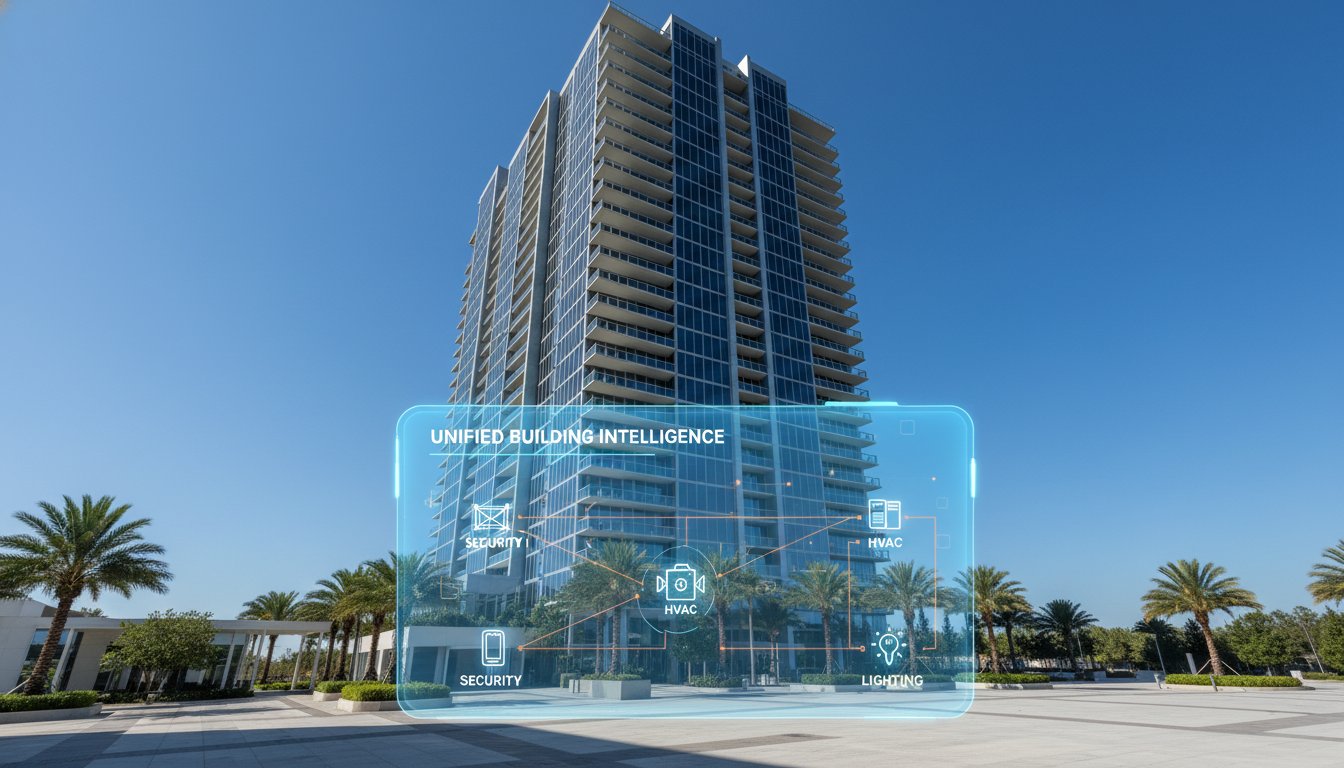
A building is more than its foundation and steel; it's a complex, breathing entity that demands stewardship. Yet, most residential assets operate in a state of digital disharmony. You likely feel the weight of this fragmentation every day. Siloed data creates blind spots. Legacy hardware invites cybersecurity risks. Without a building system unification platform, the liability of untrained staff threatens your bottom line. It's a heavy burden for any board or manager to carry alone.
You're about to discover how a unified building operating system acts as a digital nervous system to bridge these gaps. We'll show you how to transform disparate infrastructure into a single, intelligent ecosystem that prioritizes resident safety and operational clarity. We'll explore the path to a single pane of glass for all operations: a move that reduces costs and secures your asset's legacy. By integrating modern intelligence, you don't just manage a property; you orchestrate its future.
Key Takeaways
- Distinguish between superficial software links and a deep, hardware-agnostic layer that serves as your property's digital backbone.
- Learn how to bypass the expensive "rip-and-replace" trap by integrating your current HVAC, security, and IoT devices into one cohesive environment.
- Discover how a building system unification platform transforms fragmented data into predictive insights that lower operational costs and mitigate liability.
- Uncover the benefits of a sovereign operating system tailored to navigate the specific climate and compliance requirements of the Southeast.
- Gain a clear roadmap for achieving a single pane of glass that elevates both the resident experience and the long-term value of your asset.
Defining the Building System Unification Platform: Beyond Disparate Software
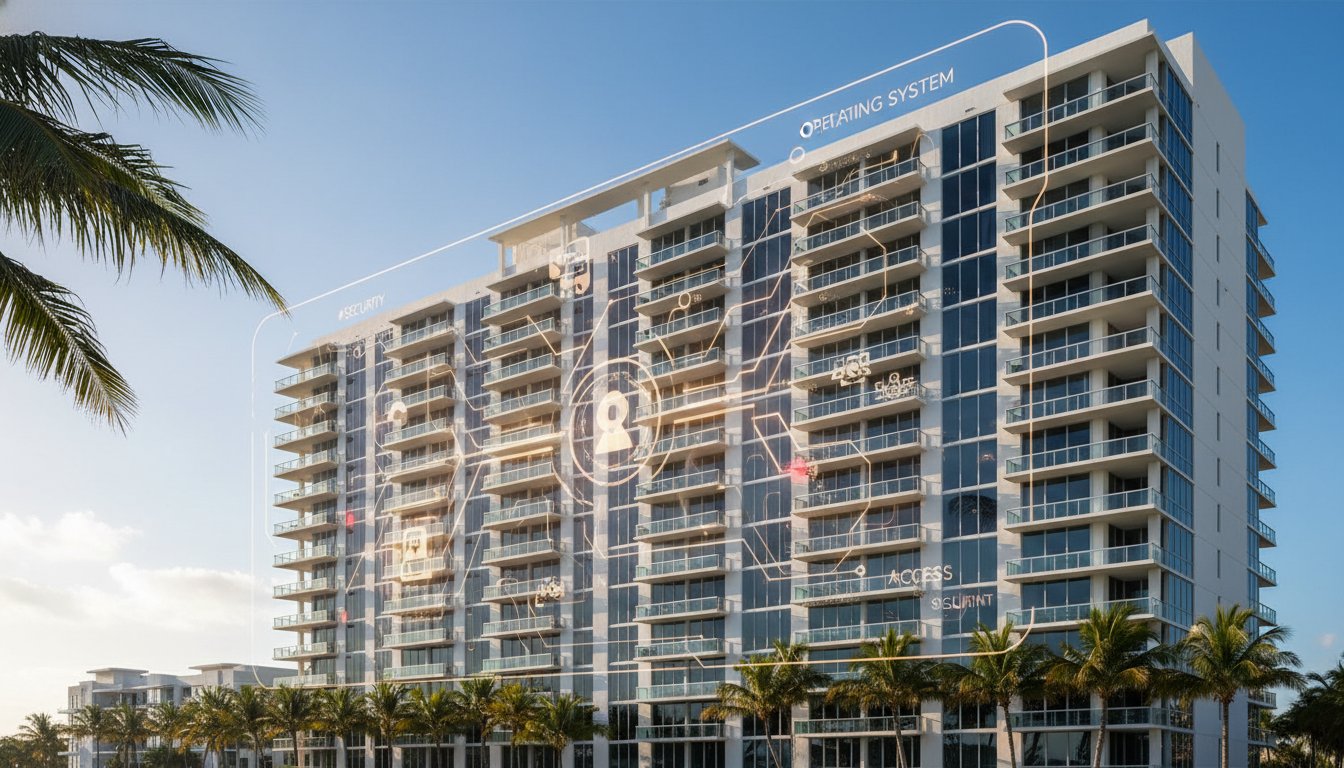
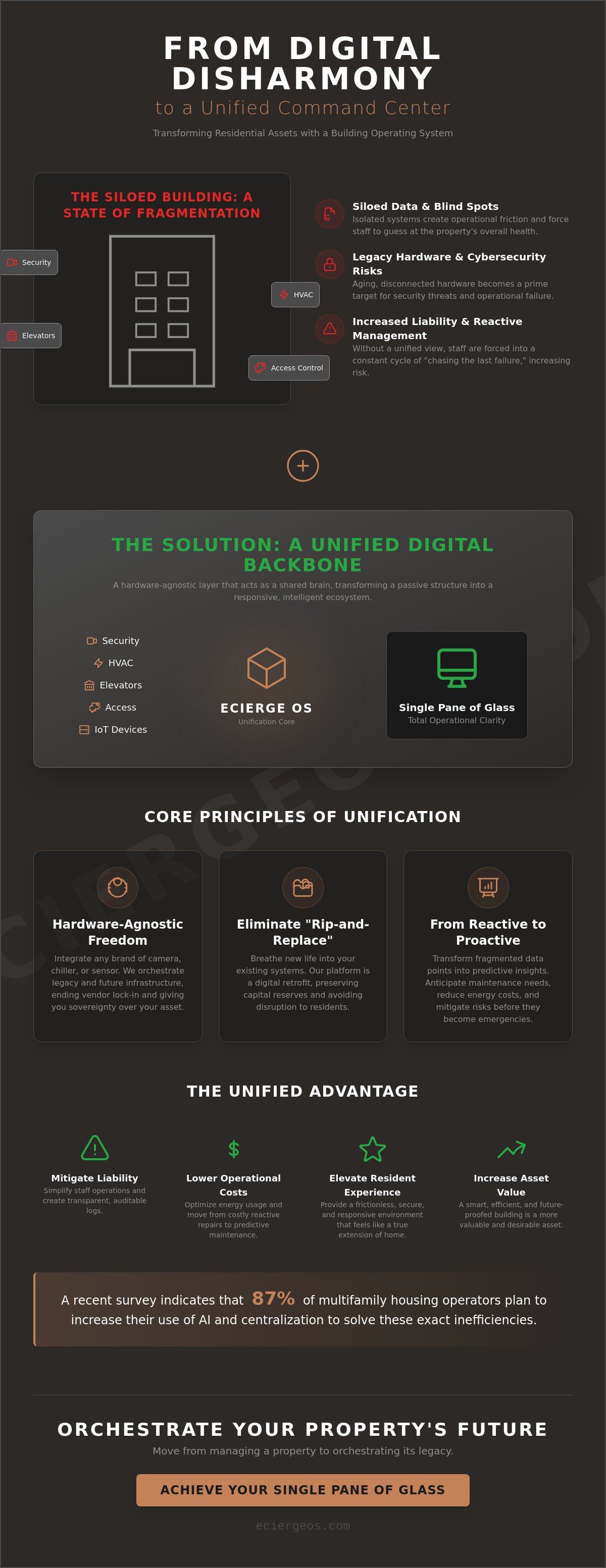
The modern residential asset is often a collection of strangers. Elevators, access readers, and HVAC chillers coexist within the same walls but rarely speak the same language. This fragmentation defines the siloed building. It's a structure where data lives in isolation, forcing staff to toggle between screens and guess at the health of the property. A building system unification platform changes this fundamental flaw. It's not another app to download. It's a hardware-agnostic layer that sits above your existing infrastructure, acting as the definitive digital backbone for the entire community.
Distinguishing between simple integration and true unification is vital for the modern board member. Integration is a handshake; it's two apps sharing a single data point. Unification is a shared brain. It's a core intelligence that understands how a leak in a fourth-floor unit impacts the elevator's electrical panel and the building's insurance risk simultaneously. This orchestration transforms a passive physical structure into a responsive, intelligent ecosystem.
The Evolution from Silos to Synergy
Disparate systems create operational friction. When security cameras don't talk to access logs, or when HVAC alerts are buried in a separate portal, management becomes reactive. You're always chasing the last failure. True unification introduces a Sovereign Intelligence. This is the state where every mechanical and digital component shares a single data language. It's a shift from being a mere repairman to becoming a visionary steward of the asset. According to a 2026 survey, 87% of multifamily housing operators are already planning to increase their use of AI and centralization to solve these very inefficiencies. By removing the silos, you allow the building to breathe as one unit.
Why Residential Assets Require Specialized Unification
Commercial buildings are designed for tenants who leave at five. Residential assets, particularly high-value condos and HOAs, are environments where lives happen around the clock. The stakes are higher. Boards need transparency. Staff need simplicity to reduce liability. Residents need a frictionless experience that feels like a natural extension of their home. Unlike commercial spaces that prioritize throughput, residential unification must prioritize life, safety, and community legacy. This platform is the invisible force bringing order to complex environments. It bridges the gap between the physical construction and the digital future, ensuring that the technology serves the residents, rather than the other way around.
The Hardware-Agnostic Core: Orchestrating Legacy and Future Infrastructure
Physical structures endure for decades. Digital systems, however, often decay in years. This mismatch creates a fundamental tension in property management: the fear of obsolescence. To solve this, a building system unification platform acts as a neutral orchestrator. It refuses to be bound by the specific brand of your cameras or the age of your chillers. This hardware-agnostic approach isn't just a technical preference; it's a strategic shield against vendor lock-in. It allows boards to regain sovereignty over their assets. You're no longer held hostage by a single manufacturer's ecosystem or their sunsetting support cycles. It's a fiscal necessity. By decoupling the software intelligence from the physical hardware, you ensure your investment in the building's "brain" remains valid even as individual "limbs" are replaced over time.
Integrating the Existing: No Rip-and-Replace Required
The greatest barrier to digital evolution is the perceived cost of entry. Boards often fear a "rip-and-replace" mandate that drains reserves and disrupts resident life. This is a myth. A sophisticated platform functions as an architectural retrofit for your digital infrastructure. It integrates existing security, HVAC, and IoT devices into a single, cohesive environment. By utilizing a condo building operating system, you breathe new life into legacy hardware. Older sensors and mechanical systems are granted a second act. They become data-producing organs in a larger, smarter body. This approach preserves capital while ensuring the property remains at the cutting edge of technological shifts. It's about stewardship, not just replacement.
The Single Pane of Glass: Operational Clarity
Complexity is the enemy of safety. When staff must manage a dozen passwords across fragmented portals, security vulnerabilities grow. Human error becomes inevitable. The solution is a single pane of glass: a unified dashboard that brings every pulse of the building into view. This is the building's digital nervous system. It provides a level of operational clarity that siloed software simply cannot match. Centralized identity management through services like OneAuth ensures digital access is as secure as the physical perimeter. It creates a seamless flow of intelligence. The platform doesn't just sit on top of the building; it becomes a living part of the architecture. It's an invisible force that translates mechanical noise into actionable clarity. To understand how your specific property backbone can support this evolution, a property backbone evaluation is the first step toward lasting order.
The Myth of the Rip-and-Replace: Unifying Existing Residential Systems
Digital transformation is often mistaken for a demolition project. Many boards hesitate to evolve because they envision a total upheaval: wires torn from walls, expensive sensors discarded, and months of resident disruption. This is the rip-and-replace myth. In reality, a building system unification platform acts as an elegant architectural retrofit for the digital age. It doesn't demand the destruction of your current assets; it demands their orchestration. By layering intelligence over your existing infrastructure, you resolve the friction between legacy hardware and modern expectations without the staggering capital expenditure of a full hardware refresh.
This approach directly addresses the accumulation of technical debt. When a property relies on a patchwork of disparate software, each update to one system threatens the stability of another. It's a fragile house of cards. Unification provides a stable, singular foundation that reduces the long-term cost of ownership. You're no longer paying to maintain several separate, aging digital islands. Instead, you're investing in a single, resilient ecosystem that grows with the building. It's a shift from being a victim of technology to being its master. A building's history shouldn't be a barrier to its future.
Evaluating the Digital Foundation
The journey toward order begins with a clear-eyed assessment of what already exists. Property backbone evaluations are essential diagnostic tools for any condo board. These evaluations go beyond a simple inventory. They identify the latent potential within your walls, such as "dark fiber" or high-capacity existing wiring that's been overlooked for years. Discovering these hidden pathways can save thousands in installation costs. It's about uncovering the hidden asset value that's already been paid for. By mapping this digital foundation, we can determine exactly how to bridge the gap between your current state and a fully orchestrated future.
The Intelligence of Retrofit Solutions
A unified platform serves as a sophisticated translator. It speaks the archaic language of analog systems and the rapid-fire dialects of modern IoT devices simultaneously. This creates a bridge where none existed before. Unlike a patchwork of "smart" gadgets that often fail to communicate, a unified architecture provides a permanent sense of stability. It's the difference between a collection of individual tools and a masterfully designed workshop. Digital legacy is built on the strength of the existing foundation.
From Reactive to Proactive: The Intelligence of Unified Residential Data
A building's data is its heartbeat. In most residential complexes, that heartbeat is erratic and unmonitored. A building system unification platform provides the stethoscope and the diagnostic tools needed to understand the property's health in real time. By centralizing the flow of information, you eliminate the noise that masks critical issues. This isn't just about technical efficiency. It's about the fiscal health of the HOA. When you can prove to an insurer that your systems are proactively monitored and your staff is fully trained, you change the conversation around risk. You move from being a high-liability asset to a gold-standard residence.
Intelligence is the ultimate amenity. In a fragmented building, data is scattered across separate logs, unread alerts, and unmonitored sensors. A unification platform harvests this raw information, turning it into a strategic asset. It's the transition from a reactive posture, where you fix what's broken, to a proactive one, where you prevent the break. This shift has profound financial implications. With multifamily property values seeing a 4% decline in 2025 compared to 2024, maintaining asset value through operational excellence is no longer optional. Reduced emergency repairs and lower insurance premiums are the natural results of a property that knows its own state. Boards no longer have to guess; they have a single source of truth.
Mastery of the Asset: Data as a Strategic Tool
Mechanical systems rarely fail without warning. They offer subtle signals: a slight increase in vibration, a rise in power draw, or a cooling cycle that runs too long. When HVAC and access data are unified, these signals become clear alerts. This intelligence is vital for residential property data intelligence, allowing for long-term capital planning that is grounded in reality rather than estimates. Managing the human element is equally critical. OneAuth provides a Sovereign Identity for the property. It streamlines staff transitions, ensuring that when an employee leaves, their digital access across every unified system is severed instantly. This level of orchestration protects the building's digital perimeter. It ensures that the digital keys to the kingdom don't linger in the hands of former contractors or employees.
Reducing Liability Through Workforce Intelligence
Liability is the silent predator of residential assets. A unified platform doesn't just monitor machines; it monitors the readiness of the people who operate them. Through Ecierge TrAin, safety training compliance is tracked alongside system performance. This ensures that every staff member is prepared for the specific risks of the property, from fire safety to crime deterrence. This is especially relevant given the 2025 requirements for staff training in specific regions. When you combine this with a "Cyber-First" architectural approach, you create a fortress that is both physical and digital. It's about building a legacy of safety. To secure your property's future and move toward a more intelligent ecosystem, explore the Ecierge OS platform subscription today.
Ecierge OS: The Sovereign Operating System for South Florida and Georgia Properties
The Southeast demands a specific kind of resilience. In the coastal corridors of South Florida and the sprawling communities of Georgia, the environment is a constant variable. A generic, global software package cannot account for the corrosive salt air of a Miami high-rise or the relentless humidity that strains Atlanta's mechanical systems. Ecierge OS is engineered as the definitive building system unification platform for these high-value residential assets. It's more than a utility; it's a sovereign operating system that honors the architectural integrity of the property while providing the digital order necessary for modern survival.
A Localized Vision for Excellence
Regional challenges require localized intelligence. In Florida, the "presumption against liability" under Statute 768.0706 makes integrated security and staff training a legal imperative rather than a luxury. Georgia's "Safe at Home Act" similarly raises the bar for habitability and system maintenance. Ecierge OS addresses these regional nuances by weaving compliance directly into the building's digital fabric. It's an invisible force that brings order to environments where mechanical failure is often accelerated by the climate. The rise in residential targeting makes a cyber security property assessment a critical pillar of stewardship. We treat your digital perimeter with the same gravity as your physical gates. The premium, architectural aesthetic of our interface ensures that the digital experience matches the luxury of your physical portfolio.
Commencing the Unification Journey
The path to order is methodical. It begins not with a purchase, but with an understanding. A property backbone evaluation serves as the initial architectural blueprint; it identifies the strengths and weaknesses of your current infrastructure. This is followed by a rigorous cyber security property assessment to seal the cracks in your digital armor. These steps ensure that the transition to an Ecierge OS platform subscription is grounded in fiscal reality and technical precision. It's a commitment to the long-term health of the asset.
You're no longer a mere manager of crises. You're a visionary orchestrator of an asset's legacy. By unifying your systems, you elevate the resident experience and secure the property's value against the uncertainties of the future. The digital age doesn't have to be a source of chaos. With the right foundation, it becomes the ultimate instrument of control. Orchestrate your property’s future with Ecierge OS.
Orchestrating the Legacy of Your Asset
The transition from a collection of siloed hardware to a unified digital ecosystem represents a fundamental shift in stewardship. It's the moment a building stops being a series of isolated maintenance tickets and begins its life as a living, intelligent asset. By adopting a building system unification platform, you secure a hardware-agnostic architecture that respects your property's history while preparing for its future. This evolution replaces reactive anxiety with proactive maintenance intelligence. It ensures that your staff is equipped with cyber-first residential security protocols that protect both residents and reputation.
The path toward this digital order is methodical. It requires a clear-eyed look at the existing foundation. You've seen how unification avoids the fiscal trap of rip-and-replace mandates and addresses regional regulatory pressures in the Southeast. Now is the time to bridge the gap between physical construction and digital sovereignty. The choice to unify is a choice to lead.
Request a Property Backbone Assessment from Ecierge OS
Your property's future isn't a matter of chance; it's a matter of design. Take the first step toward a more intelligent, orderly, and resilient community today.
Frequently Asked Questions
What is the difference between property management software and a building system unification platform?
Administrative software manages the ledger; unification manages the pulse. While traditional property management tools handle billing and resident communication, a building system unification platform orchestrates the physical infrastructure itself. It bridges the gap between mechanical noise and digital clarity. This platform acts as the building's digital nervous system, integrating HVAC, security, and IoT into one cohesive environment. It's the difference between managing a business and mastering a machine.
Can a unification platform work with my existing, older security cameras and HVAC units?
Older mechanical systems are not obsolete; they are simply silent. A unified platform acts as a sophisticated translator for legacy security cameras and HVAC units. It extracts intelligence from your existing hardware without requiring a total replacement. This retrofitting process breathes new life into your current assets. It ensures that your previous capital investments remain functional within a modern, intelligent ecosystem. You gain the benefits of future technology while respecting the building's history.
How does a unified building system improve cybersecurity for residents?
Fragmented systems are a playground for digital intruders. By unifying your infrastructure, you consolidate your security perimeter into a single, defensible front. Centralized identity management through services like OneAuth ensures that staff access is precisely controlled and instantly revocable. This architecture reduces the attack surface by eliminating the need for dozens of disparate, unmonitored passwords. It's a cyber-first approach to residential safety that treats digital infrastructure with the same gravity as physical construction.
Is a building system unification platform only for luxury high-rises?
Order is not a luxury; it's a fundamental requirement for any complex residential environment. While high-rises possess vertical complexity, HOAs and garden-style condos face horizontal fragmentation. Any property burdened by siloed systems and rising liability benefits from this orchestration. The building system unification platform scales to fit the unique architectural footprint of the community. It provides a level of sophistication that matches the value of the portfolio, regardless of the building's height or density.
What is hardware-agnostic software, and why does it matter for an HOA board?
Hardware-agnostic software is a digital environment that refuses to be bound by a single manufacturer's brand. For an HOA board, this means sovereignty over the building's future. You can choose the best cameras or chillers for your needs without worrying about software compatibility. It prevents vendor lock-in and protects the property from the planned obsolescence of proprietary hardware ecosystems. It's a strategic shield for your long-term capital reserves and a guarantee of technical permanence.
How long does it typically take to unify a residential property’s systems?
The timeline for unification is a methodical progression rather than a single event. It begins with a property backbone evaluation to map the existing digital nervous system. Once the foundation is understood, the integration of core systems like security and access typically unfolds over several weeks. This phased approach ensures minimal disruption to resident life. The result is a seamless transition from a collection of parts to a single, orchestrated ecosystem that functions with quiet, deliberate power.