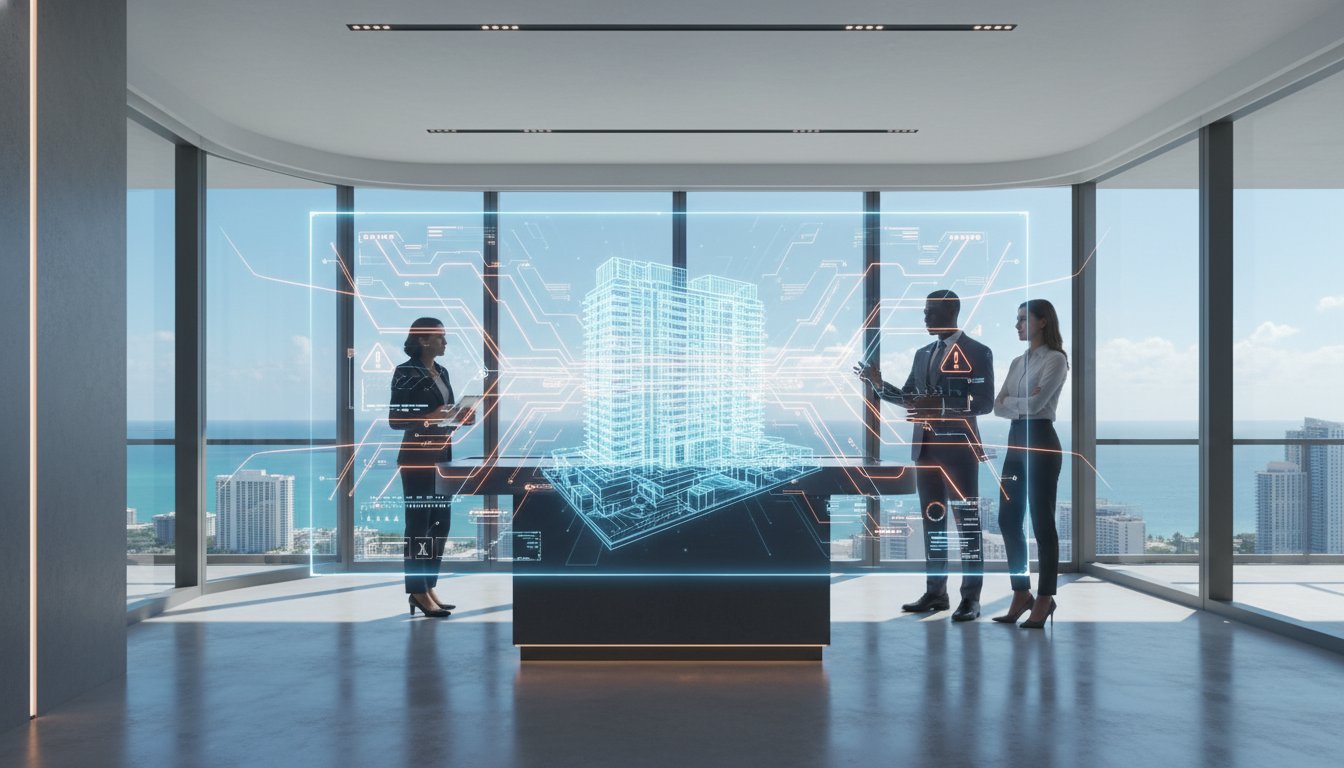
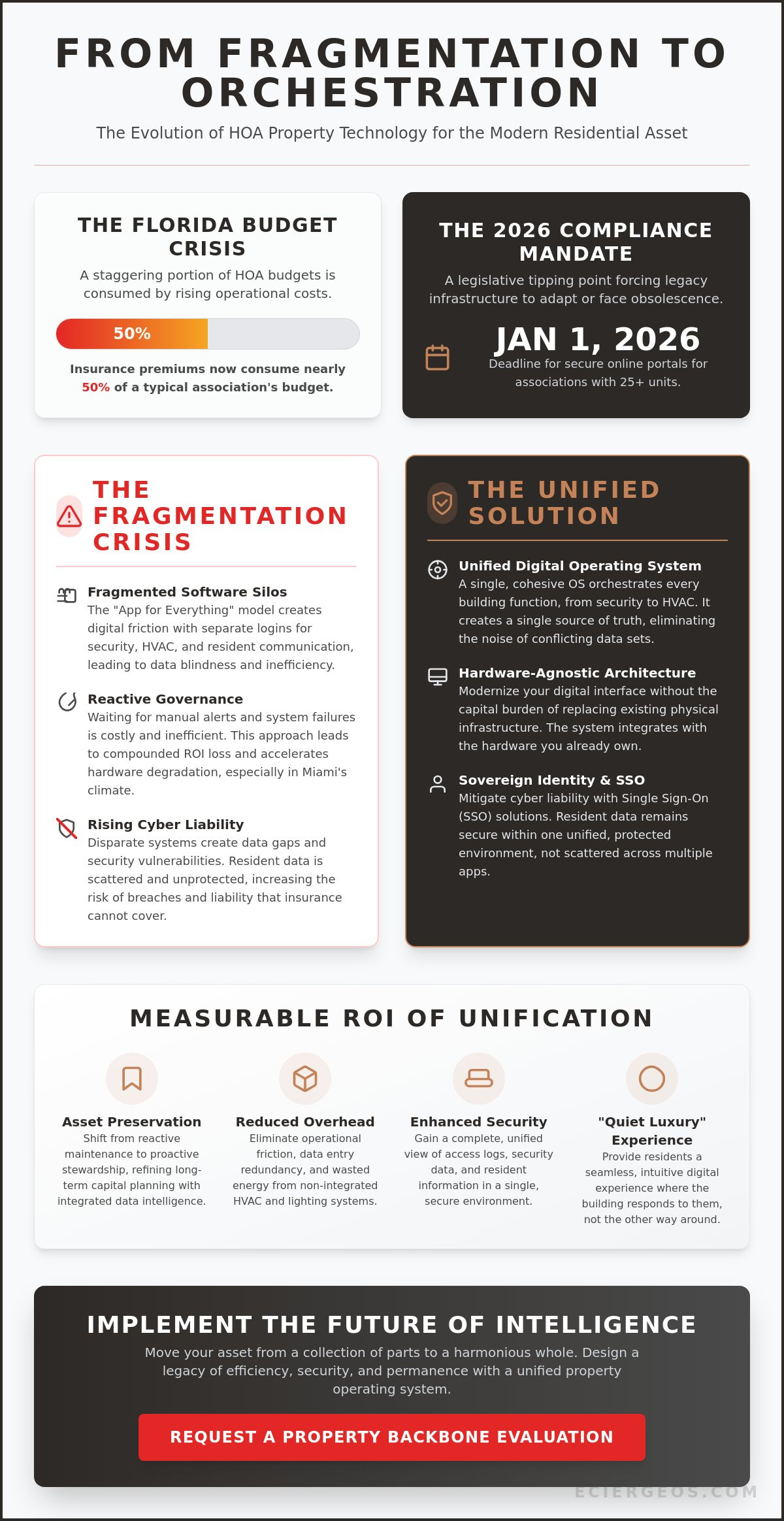
The modern residential asset is no longer defined by its architectural silhouette alone; it's defined by its digital pulse. In a climate where insurance premiums consume nearly 50 percent of a Florida association's budget, the traditional approach to HOA property technology Miami has become a liability rather than an asset. You likely feel the friction of fragmented software silos and the mounting pressure of the January 1, 2026, website compliance mandate for buildings with 25 or more units. It's a heavy burden to carry.
This analysis explores the transition from disparate tools to a unified digital operating system designed to restore order and intelligence to complex environments. You'll discover how premier assets are consolidating their digital backbone to increase security, protect resident data, and reduce the staggering operational overhead that plagues aging hardware. We'll examine the strategic shift toward sovereign identity and integrated orchestration that defines the 2026 horizon.
Key Takeaways
- Understand the evolution of HOA property technology Miami from a collection of disparate tools into a single, cohesive digital operating system that orchestrates every building function.
- Discover how hardware-agnostic architecture allows boards to modernize their digital interface without the capital burden of replacing existing physical infrastructure.
- Learn to mitigate rising cyber liability through sovereign identity solutions like Single Sign-On; this ensures resident data remains secure within a unified environment.
- Explore the shift from reactive maintenance to proactive stewardship, using integrated data intelligence to refine long-term capital planning and asset preservation.
- Identify the measurable ROI of building system unification, where reduced operational friction translates directly into enhanced security and resident experience.
The 2026 Landscape of HOA Property Technology in Miami
The year 2026 marks a definitive boundary in the evolution of Florida's residential skyline. It's no longer sufficient for an association to merely "manage" its residents; it must now orchestrate its entire environment. We're witnessing a fundamental shift where traditional property management software is being replaced by comprehensive Property Operating Systems. This isn't a cosmetic change. It's a structural necessity. For high-value assets in neighborhoods like Brickell and Coral Gables, HOA property technology Miami has evolved into the central nervous system of the building. The January 1, 2026, mandate requiring associations with 25 or more units to maintain secure online portals is only the beginning. It's the tipping point where legacy infrastructure must either adapt or face obsolescence.
The Rise of the Intelligent Asset in South Florida
The building is a living organism. In South Florida, this organism faces unprecedented environmental and financial pressures. With insurance premiums now accounting for nearly 50 percent of a typical HOA's budget, the margin for operational error has vanished. Boards are increasingly turning to sophisticated home automation systems and integrated intelligence to find efficiencies that manual oversight cannot reach. This transition is also driven by a demand for "Quiet Luxury." Residents in Miami's premier towers expect their digital interactions to be as seamless and invisible as the concierge service. They don't want to see the gears turning. They want the environment to respond intuitively to their presence, ensuring that technology serves the resident rather than the other way around.
From Management Silos to Unified Orchestration
Fragmentation is the enemy of order. For years, high-density HOAs have suffered under the "App for Everything" model, where security, HVAC, and resident communications exist in isolated silos. This digital friction is a hidden tax on property managers. It leads to data blindness and, eventually, expensive mechanical failures. The modern board member must act as a Visionary Orchestrator. They aren't just choosing a software vendor; they're designing a legacy. By moving away from fragmented HOA property technology Miami and toward a unified platform, associations eliminate the noise of separate logins and conflicting data sets. This unified orchestration creates a single source of truth. It allows the building's digital backbone to support its physical weight with grace, precision, and a renewed sense of permanence.
The Fragmentation Crisis: Why Current HOA Tech Fails Miami Boards
Fragmentation is a silent architect of decay. In the high-stakes environment of South Florida real estate, the reliance on disparate software modules has created a precarious digital foundation. Most boards operate under the illusion of control while managing a chaotic patchwork of separate logins for security, climate control, and IoT devices. This friction isn't just an inconvenience. It's a fundamental breakdown in building stewardship. Traditional property management software often stops at the office door; it fails to communicate with the actual physical hardware that keeps a tower breathing. To bridge this gap, visionary boards are moving toward a more integrated approach to HOA property technology Miami.
The Architectural Flaw of Disparate Systems
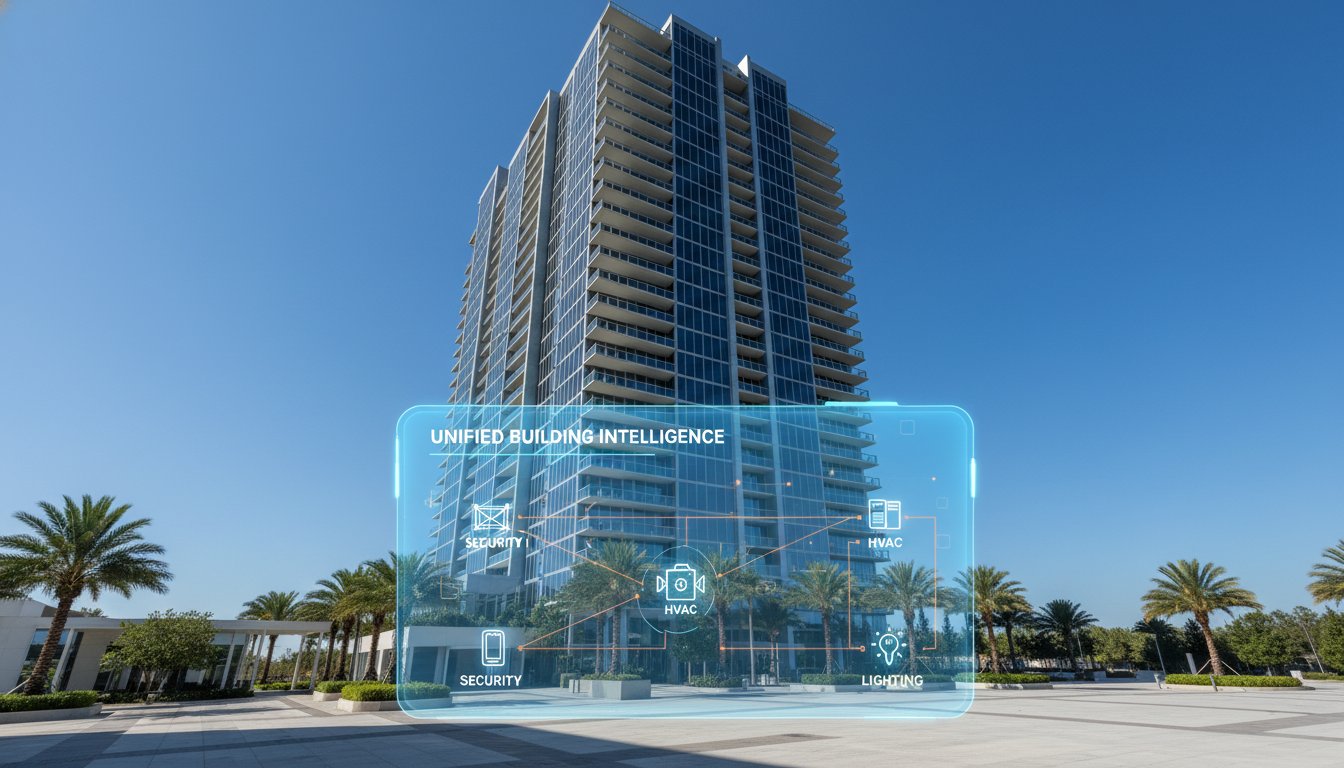
Systems that can't speak to one another are effectively blind. When a security suite doesn't integrate with access logs or resident Wi-Fi, the resulting data gap creates a liability that no insurance policy can fully cover. HVAC systems that cycle without occupancy data aren't just inefficient. They're wasteful. This siloed intelligence prevents the board from seeing the building as a single, unified entity. Without a centralized orchestration layer, the property exists as a collection of parts rather than a harmonious whole. Identifying these gaps is the first step toward recovery, often starting with professional property backbone evaluations to map the current state of digital health.
The Cost of Reactive Governance
Reactive maintenance is a drain on the soul of a building. When systems are only addressed upon failure, the loss of ROI is immediate and compounding. In Miami, where salt air and humidity accelerate hardware degradation, waiting for a manual alert is often too late. Fragmented technology also erodes staff morale. Property managers are forced to act as data entry clerks rather than asset stewards, leading to high turnover in an already competitive market. This digital chaos eventually reaches the capital reserve funds. Emergency repairs for aging HVAC or security hardware, driven by a lack of proactive data, deplete the very resources meant for the building's future.
Centralized oversight is the only antidote to "shadow IT" and uncoordinated upgrades. Without it, the digital infrastructure of the property becomes a liability, exposing residents to cyber risks and data breaches. To truly protect the asset, boards must move beyond the surface-level features of standard HOA property technology Miami. They must demand a system that unifies the digital and physical realms into a single, resilient environment where data flows as naturally as the coastal breeze.
Building System Unification: The Hardware-Agnostic Revolution
Unity is the highest form of architectural expression. In the digital era, this unity is achieved through hardware-agnosticism: the ability to decouple the operating intelligence from the physical components of a building. Most traditional approaches to HOA property technology Miami tether associations to specific vendors, creating a cycle of dependency and forced obsolescence. A hardware-agnostic revolution changes this dynamic. It allows the board to choose the software environment that best suits their governance style while utilizing the hardware already embedded in the building's walls. This is the "Single Pane of Glass" concept. It's a singular, authoritative interface where HVAC, security, and IoT sensors converge into a harmonious digital ecosystem. Order is an achievement. By centralizing these disparate inputs, boards can finally see the building as a living, breathing entity rather than a collection of uncoordinated parts.
Retrofitting Intelligence into Legacy Miami Assets
The most sustainable building is the one already standing. You don't need to rip and replace expensive elevators, chiller plants, or access panels to achieve modern intelligence. By implementing a condo building operating system, boards can bridge the gap between legacy construction and 21st-century expectations. This approach treats the building's existing mechanical systems as a foundation upon which a new, intelligent layer is laid. It's an act of digital preservation. It secures the asset's future and enhances resident experience without the capital-heavy sacrifice of a total hardware overhaul. This strategy is particularly vital for the iconic high-rises along the coast, where structural integrity and digital modernization must go hand in hand.
Proactive Maintenance through IoT Integration
Imagine a building that feels its own pulse. In the oppressive Miami heat, an HVAC failure is more than a nuisance; it's a crisis of habitability. Unified HOA property technology Miami uses sensor data to detect subtle anomalies in vibration or power draw, predicting failures before the first resident notices a rise in temperature. This creates a biological-style synergy. Access control data informs energy management, adjusting common area environments based on real-time occupancy. It's a rhythmic, efficient orchestration. Every watt of power and every dollar of the reserve fund is used with surgical precision. This transition from reactive repair to proactive stewardship is the hallmark of a mature, intelligent asset. It ensures that the building doesn't just survive the Florida climate but thrives within it.
Sovereign Identity and Cyber Security: Protecting the Miami Core
Identity is the new perimeter. While physical gates and concierges provide a sense of traditional safety, the true vulnerability of a Miami high-rise lies in its digital shadow. As we approach the January 1, 2026, mandate for association portals, the architecture of HOA property technology Miami must prioritize the sovereign identity of the resident, ensuring that data is not merely stored but actively shielded. A unified system isn't a point of weakness; it's a fortress of consolidation. By reducing the attack surface from a dozen fragmented apps to a single, hardened operating environment, boards can finally offer residents the digital privacy that matches their physical exclusivity. Security is no longer an afterthought. It's a foundational pillar of modern asset stewardship.
The New Frontier of Residential Cyber Liability
The digital landscape of South Florida is a high-value target. Miami HOAs often house sensitive financial data and personal information that make them prime candidates for identity theft and ransomware. This reality has reached the desks of insurance carriers. Many Florida providers now require a formal cyber security property assessment as a prerequisite for coverage or to mitigate staggering premium increases. It's a shift toward cyber-first architectural safety. Managing the property backbone ensures that resident Wi-Fi and building IoT devices aren't just functional, but isolated from the core administrative network. We're moving beyond simple firewalls into a realm where the building's digital pulse is monitored for the slightest rhythmic anomaly.
OneAuth: Securing the Building Staff Ecosystem
Human error remains the most persistent threat to building integrity. In many towers, the danger is hidden in plain sight: shared passwords among property staff, maintenance vendors, and rotating security personnel. This lack of an audit trail is a liability that no board should accept. Implementing a OneAuth Single Sign-On identity service eliminates this chaos by providing a single, secure point of entry for every system the building operates. It creates a definitive record of who accessed the HVAC controls or the resident directory and when. This level of orchestration is essential for protecting the digital identity of high-profile residents who demand total discretion. By streamlining access through a unified identity layer, the building functions with the precision of a well-tuned machine, where every interaction is authenticated and every data point is preserved with absolute integrity.
Implementing the Future: The ROI of Intelligence with Ecierge OS
Stewardship is a deliberate act. It's the transition from a building that merely exists to one that actively preserves its own future. As Miami-Dade associations face median fees that have climbed 59 percent since 2019, the financial logic of adopting a unified HOA property technology Miami solution becomes undeniable. The Ecierge OS platform subscription provides the orchestration layer necessary to turn raw data into a defensive asset. It's about moving beyond the noise of daily operations to the clarity of long-term capital planning. ROI in this context isn't just a number on a spreadsheet; it's the measurable extension of a building's lifecycle and the protection of its reserve funds.
The Financial Logic of a Digital Operating System
A building that knows its own pulse is a building that costs less to maintain. By leveraging the integrated intelligence of a unified platform, boards can reduce long-term capital expenditures through precise asset tracking. Intelligence allows you to see the invisible. When HVAC systems and mechanical hardware are monitored for rhythmic anomalies, you avoid the catastrophic failures that drain reserves. This digital sophistication increases the market value of individual units. Discerning buyers in Brickell and Coral Gables look for more than aesthetics; they look for the "Quiet Luxury" of a building that is managed with surgical precision. Data-driven reporting makes this value visible to the board, justifying the investment through clear, empirical evidence of operational harmony.
A Strategic Roadmap for Miami HOA Boards
The journey toward a unified future begins with a diagnostic. A Property Backbone Evaluation provides the master plan for this transformation, identifying where your current infrastructure is strong and where it's failing. It's a technical blueprint for unification. Once the backbone is understood, boards can focus on high-impact integration points like security and climate control. Operational excellence also requires a trained workforce. Through Ecierge TrAin safety training, property staff are elevated from simple observers to active participants in the building's digital health. They become the human element of the integrated ecosystem.
Partnering with a Visionary Orchestrator is the final step in securing the building's legacy. It's about finding a steward who understands that software is not a tool, but the primary operating system of the asset. By starting with a comprehensive evaluation and layering in the OneAuth identity service, you create a digital perimeter that is as resilient as the physical structure. The future of HOA property technology Miami is no longer a distant vision; it's a strategic requirement for any asset that intends to endure.
Orchestrating the Digital Legacy of the Miami Skyline
The transition from fragmented software silos to a unified digital operating system is more than a technical upgrade; it's an act of stewardship for the modern residential asset. By embracing a hardware-agnostic architecture, boards can modernize their property's pulse without the disruption of a total hardware replacement. We've moved beyond the era of simple management tools. The future of HOA property technology Miami lies in integrated orchestration where security, HVAC, and resident identity exist in a single, harmonious environment. This unification is the definitive path to reducing operational friction and securing resident data against the rising tide of cyber liability.
Your building's digital backbone deserves the same architectural rigor as its physical foundation. Our Miami-based technical expertise ensures that your transition to an integrated cyber-first security environment is both elegant and absolute. To begin this transformation, request your Property Backbone Evaluation from Ecierge OS. It's time to replace reactive management with proactive intelligence. The path to a resilient, high-value asset is clear, and the tools to achieve it are within your reach.
Frequently Asked Questions
What is the difference between HOA management software and a property operating system?
Traditional management software is a ledger for administrative tasks; a property operating system is the central nervous system for the physical asset. While software handles accounting and resident lists, an operating system orchestrates the building's mechanical pulse, integrating HVAC, security, and access control into one environment. This shift allows for the active stewardship of the building's physical integrity rather than just its paperwork.
Do we need to replace our current security cameras to use Ecierge OS in Miami?
No. Our platform is built on a hardware-agnostic architecture that integrates with your existing physical infrastructure. You don't need to endure the waste of "rip and replace" cycles to achieve modern intelligence. We layer our digital orchestration over your current cameras and sensors, breathing new life into legacy hardware without the capital burden of a total replacement.
How does hardware-agnostic technology help our HOA budget?
It preserves your capital reserve funds by extending the operational lifespan of your current mechanical assets. By decoupling the software from the hardware, boards can modernize their HOA property technology Miami without the high cost of purchasing new physical devices. This approach ensures that your tech investment goes toward intelligence and orchestration rather than redundant hardware sales.
Is cybersecurity a real concern for residential buildings in South Florida?
Cybersecurity is a fundamental pillar of modern property safety. With the 2026 mandate for digital portals, your building's attack surface has expanded significantly. A cyber security property assessment is often the first step in securing resident data and stabilizing insurance premiums, which can account for nearly 50 percent of an association's budget in the current Florida market.
What is a Property Backbone Evaluation and why does our condo need one?
A Property Backbone Evaluation is a comprehensive audit of your building's digital and mechanical connectivity. It identifies the hidden silos and vulnerabilities that cause operational friction. Your condo needs this diagnostic to create a strategic roadmap for unification, ensuring that your digital infrastructure is as resilient and structured as the building's physical foundation.
Can unified technology help reduce our building’s energy costs?
Yes. When your building systems work in harmony, energy use becomes a precise orchestration rather than a blunt instrument. By integrating occupancy data with HVAC controls, the system reduces cooling in empty common areas. This biological-style efficiency ensures that your building only breathes as hard as it needs to, directly lowering your operational overhead.
How does SSO (Single Sign-On) improve staff efficiency in a residential setting?
OneAuth Single Sign-On eliminates the chaos of managing dozens of disparate logins for property staff and vendors. It streamlines access into a single, secure point of entry that provides a definitive audit trail. Staff spend less time fighting digital friction and more time focusing on high-value asset stewardship, which is essential for maintaining the standards of HOA property technology Miami.
What kind of training is provided for our onsite property staff?
We provide Ecierge TrAin safety training to ensure your onsite team can manage a sophisticated digital environment with confidence. This program elevates staff capabilities, transforming them from simple observers into active stewards of the building's integrated systems. It bridges the gap between high-level technology and the human element of property management.